Selective Pallet Racking
The one you probably need, whatever anyone else tells you.
Selective Pallet Racking
Most warehouses do not need something clever. They need every pallet reachable, fast, without a forklift threading past three others to get to it. That is selective pallet racking, and it is the default for a reason.
It scales from a single bay to a full distribution centre without changing character, and it runs on whatever forklift or reach truck you already own. If your SKU count is high and your stock turns often, this is where to start, not where you end up after trying something fancier first.
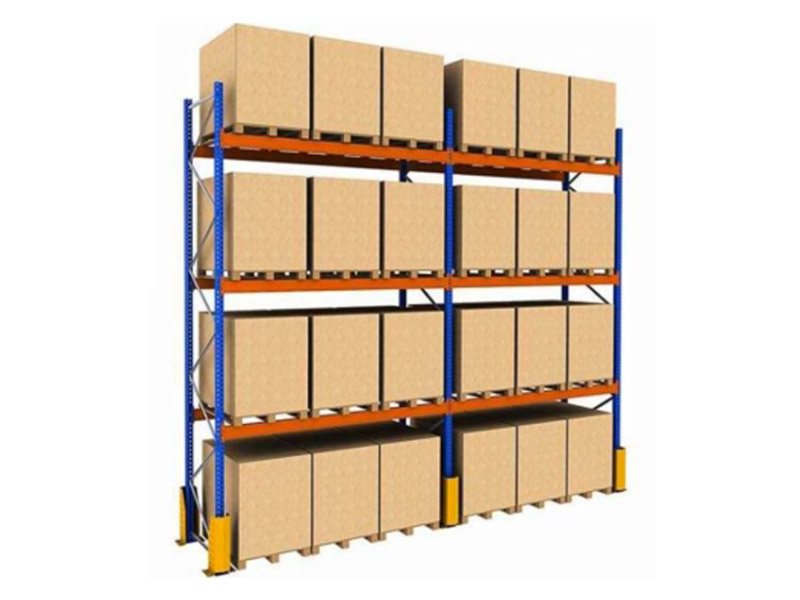
Why choose this system.
Every single pallet reachable straight from the aisle
Beam levels adjust as your stock changes
Runs on standard forklifts, no special equipment
Add a bay next year without redesigning the row
Built to your requirement.
| Type | Adjustable beam racking |
| Load per level | 1000 to 4000 kg, per design |
| Height | Engineered to building and MHE |
| Finish | Powder-coated / galvanised |
Values are indicative. Final specifications are engineered for each project.
Typical applications
The engineering behind it.
Each bay is built from vertical frames connected by horizontal beams, with beam levels bolted or clipped into pre-punched slots so height can be adjusted without cutting or welding on site. Beam load ratings typically range from 1,000 kg to 4,000 kg per level depending on the gauge of steel and the span between frames, and we engineer this to your actual pallet weight rather than defaulting to a generic mid-range rating.
Frame depth is set to your pallet footprint plus clearance, usually 1,000 to 1,200 mm for a standard Indian pallet, and aisle width is set to whatever forklift or reach truck you run, typically 2.7 to 3.5 metres for a counterbalance truck or as little as 1.8 metres for narrow-aisle equipment.
What buyers usually ask.
What forklift do I need for selective racking?
Any standard counterbalance or reach truck works. There is no special equipment requirement, which is one of the reasons this format is the default choice for most warehouses.
Can I add more bays later without redesigning the row?
Yes. Selective racking extends in a straight line, so adding bays at the end of an existing row is usually a simple addition, not a redesign, as long as the aisle width stays consistent.
How long does installation take for a typical warehouse?
A mid-sized installation, around 100 to 150 bays, typically takes our crews 5 to 10 working days from delivery to commissioning, depending on site access and whether it is a new build or a retrofit around existing operations.