
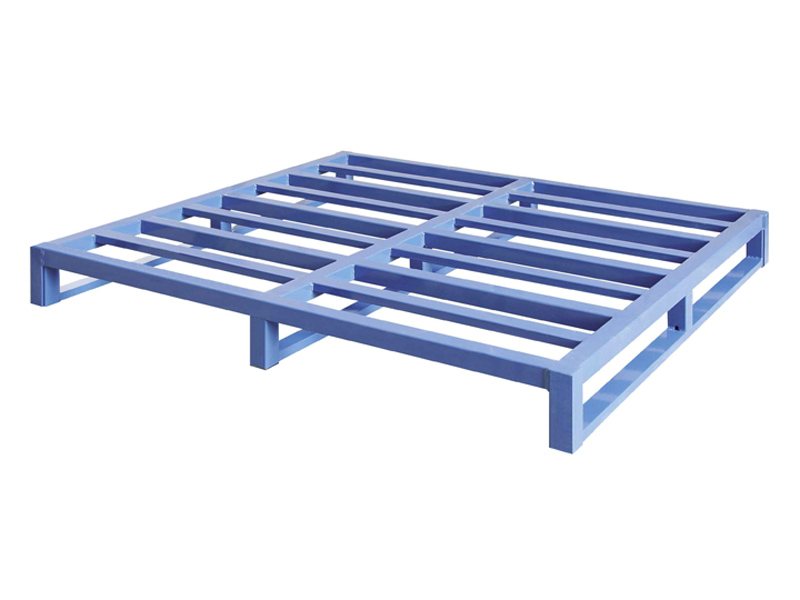
Wooden pallets win on upfront price almost every time. Once you factor in replacement frequency, damage, and the requirements of certain industries, the comparison looks different, and steel pallets often come out ahead on total cost of ownership.
Durability and lifespan
A steel pallet withstands repeated heavy use, forklift handling and rough conditions without splintering, cracking or gradually losing structural integrity the way wood does. Where wooden pallets are typically replaced every one to three cycles through a demanding supply chain, steel pallets routinely last for years under the same conditions.
Hygiene and fire safety
Wood absorbs moisture, harbours pests, and cannot be properly sanitised the way steel can. For food, pharmaceutical and cold storage applications, this is often a compliance requirement rather than a preference. Steel is also non-combustible, which matters for fire-rated storage areas where wooden pallets add fuel load.
Where wooden pallets still make sense
For single-use export shipments or low-frequency, low-value movements, the lower upfront cost of wood can still make sense, particularly when the pallet is not expected to return. The calculation changes once a pallet is cycling repeatedly through your own operation.
Getting the total cost comparison right
The honest comparison is not purchase price per pallet. It is purchase price divided by expected lifespan, plus damage and replacement labour, plus any compliance requirement your industry carries. Run that calculation and steel frequently wins for anything used repeatedly in-house.
The break-even point most buyers never calculate
A wooden pallet typically survives somewhere between 10 and 20 handling cycles before failing. A steel pallet, properly maintained, can last for hundreds of cycles. Once you calculate cost per use rather than cost per unit, steel usually becomes cheaper within the first one to two years of moderate use, not more expensive as the sticker price alone suggests.
Hygiene requirements that make the decision for you
Pharmaceutical, food and certain export operations do not really have a choice here, wood cannot be reliably sanitised the way steel can, and increasingly strict hygiene audits are pushing these industries toward steel pallets regardless of the upfront cost difference. If your sector has audit requirements, check them before assuming wood is the default.
ISPM 15 and why steel skips a compliance headache
Wooden pallets used in international shipping generally need to be heat-treated or fumigated under ISPM 15 regulations, and stamped to prove it, which adds cost and paperwork to every export shipment. Steel pallets are exempt from these requirements entirely, which is a real, recurring saving for anyone shipping internationally on a regular basis.
Where wood still wins outright
Single-use or very low-cycle shipping, where the pallet is essentially disposable, still favours wood on pure upfront cost. The steel advantage only compounds with repeated use, so a pallet that is used once and never returned rarely justifies the higher initial spend.
The right pallet material is a function of how many times it gets used, not what it costs on day one.
The cheapest pallet on the invoice is not always the cheapest pallet in the warehouse a year later.
We manufacture steel flat pallets engineered to your load and entry requirements. If pallet damage or replacement cost has become a recurring line item, it is worth running the comparison properly.