
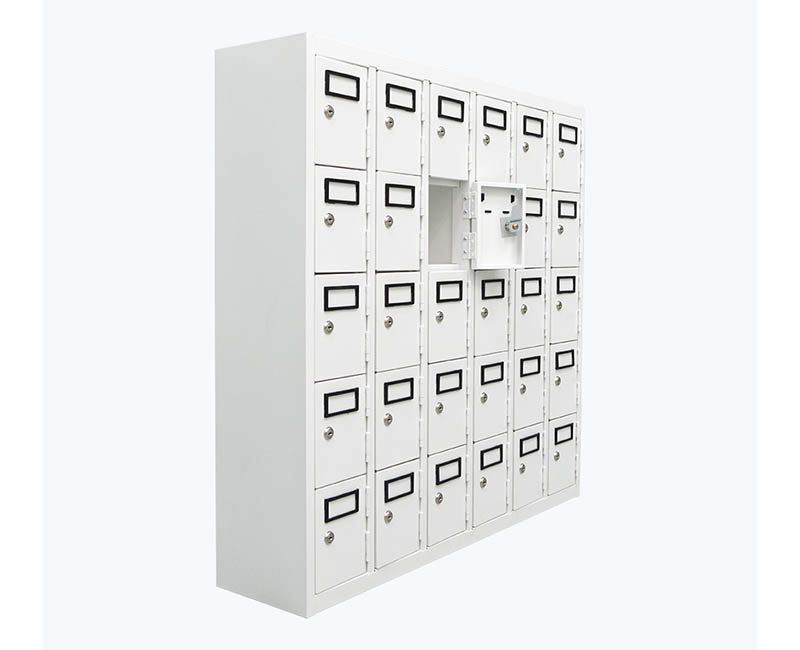
Staff lockers do not get much strategic attention, but they are one of those purchases where getting it slightly wrong creates a daily, low-grade frustration for everyone who uses them. Getting it right is straightforward once you know what to check.
Compartment size and count
The right number of compartments per unit depends on what staff actually need to store, phone and wallet needs far less than a full change of clothes and a bag. Sizing lockers around actual use, rather than defaulting to a standard configuration, avoids the common complaint of lockers being either cramped or wastefully oversized.
Locking options
A simple hasp for a personal padlock costs less and gives staff full control. A built-in key lock is faster to issue and track centrally. The right choice depends more on your administrative preference than on security, both are secure when properly built.
Ventilation matters more than it looks
Ventilated doors prevent odour and moisture buildup, particularly important for factory environments where damp clothing or footwear is common. Solid, unventilated doors trap that moisture and shorten how pleasant the lockers stay to use.
Finish and durability for high-traffic use
Lockers in a factory changing room take daily impact from bags, tools and general use. A durable powder-coated steel finish holds up to that in a way lighter-gauge alternatives do not, and it matters for how the space looks a year from now, long after installation day is forgotten.
Sizing compartments to what people actually store
Most locker sizing mistakes come from designing around a generic assumption rather than what staff actually need to store, a phone and wallet needs far less room than a full change of clothes and bag. Survey actual use before finalising compartment count and size, since retrofitting the wrong configuration later means replacing the whole bank, not just adjusting it.
Locking options, matched to the setting
A simple hasp for a padlock suits low-risk settings where staff bring their own lock. Built-in key locks suit environments where losing a personal padlock key is a recurring headache. Combination or coin-return locks suit public or gym settings where lockers turn over constantly through the day. The right choice depends entirely on who is using the locker and how often.
Ventilation: a small detail with a real impact
Ventilated doors matter more than they look like they should, particularly for lockers storing gym clothes, wet gear or anything that can develop odour or mildew if sealed in completely. It is a small manufacturing detail that has an outsized effect on how a locker bank actually smells and performs after a year of daily use.
Durability that survives being used by people who did not choose it
Institutional and factory lockers get handled by people who never selected the equipment and will not treat it gently. A genuinely sturdy steel build with a finish that resists dents and scuffs will outlast a locker chosen mainly for looking good in a showroom.
Nobody notices good lockers. Everyone notices bad ones, and it matters for how the space looks a year from now, long after installation day is forgotten.
Nobody notices good lockers. Everybody notices the wrong ones, every single day they use them.
We manufacture staff lockers across a full range of compartment sizes and locking options, built for factory, office, and institutional use. Tell us your headcount and storage needs and we will recommend the right configuration.