
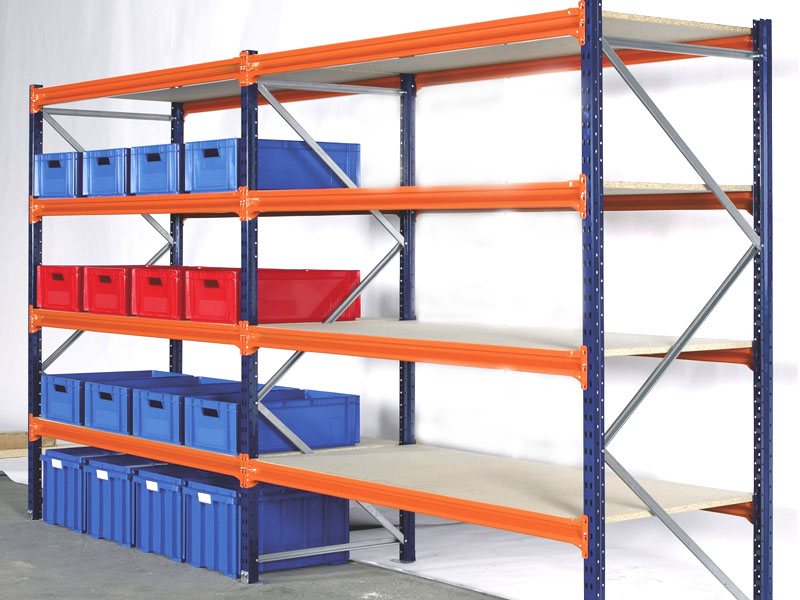
Racking pricing in India can vary widely between quotes that look, on paper, like they are describing the same thing. Understanding what actually drives the cost helps you evaluate quotes properly instead of comparing on price alone.
Steel grade and section thickness
Lighter gauge steel and lower-grade sections cost less upfront and carry less load safely. The rated capacity printed on a quote is only meaningful if it matches the actual steel specification behind it, two systems with the same stated load rating can differ significantly in the steel used to achieve it.
Load rating and configuration
A system engineered for your actual heaviest SKU costs more than a generic light-duty spec, but it also does not need replacing in two years when your inventory mix shifts heavier. Under-specifying to win a lower quote is one of the most common false economies we see.
Finish and duty environment
Powder coating quality and galvanising affect both appearance and how long the system lasts in your specific environment, humid coastal conditions and cold storage both accelerate corrosion on a poorly finished system. This cost is easy to cut on a quote and expensive to have cut later.
Design, manufacturing and installation as one package
Systems where design, manufacturing and installation happen in-house tend to have fewer costly surprises during fitout than systems assembled from multiple vendors with handoffs between them. That coordination cost is real, even when it does not show up as a separate line item.
A realistic per-bay cost range, and why it varies so much
A basic selective racking bay in India might run from a modest few thousand rupees for light-duty, low-height applications, up to several times that for heavy-duty, tall bays with premium finish and engineered bracing. That is a wide range on purpose, because load, height and finish genuinely do change the number by that much. Anyone quoting a single flat per-bay figure without asking about your load and environment is quoting blind.
Where buyers overspend without realising it
Specifying a heavier gauge or higher load rating than your actual goods require is the most common overspend we see, often because a buyer defaults to "stronger is safer" without checking what their pallets actually weigh. The right answer is engineering to your actual load with a sensible safety margin, not the highest rating available.
Where buyers underspend and pay for it later
Skipping proper corrosion protection in a humid or coastal environment, or cutting installation quality to save a small percentage upfront, both tend to cost more within a few years through early replacement or safety issues. The cheapest quote in the room is rarely the cheapest system over its working life.
How to actually compare two quotes fairly
Match load rating, height, finish and installation scope line by line before comparing the bottom number. A lower quote missing installation, or specified to a lighter load than you need, is not actually cheaper, it is a different, incomplete product being compared against a complete one.
Racking cost only means something once you know exactly what you are comparing it against.
The cheapest quote and the cheapest racking are not always the same thing once you account for what happens after year two.
We design, manufacture and install every system ourselves, engineered to your actual load rather than a generic spec, and we are straightforward about what drives the number on a quote. Send us your requirement and we will give you a transparent breakdown.