
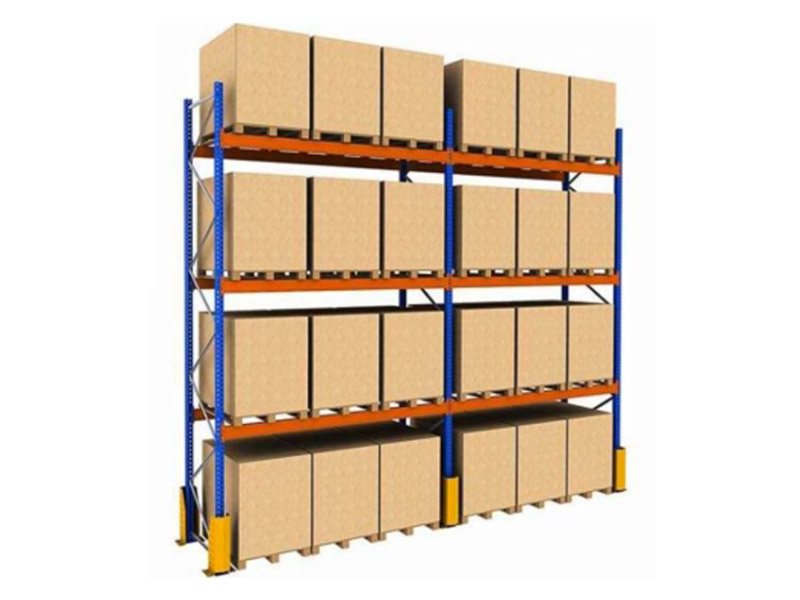
Racking mistakes are expensive in a way most other warehouse decisions are not. A wrong paint colour gets repainted. Wrong racking gets torn out, or worse, stays in place and quietly costs money every single day it is used.
After years of walking into warehouses built by other suppliers, or built in a hurry, the same handful of mistakes show up again and again. Here are the ones that cost businesses the most, and how to avoid them.
Buying racking before planning the layout
This is the most common mistake, and the most expensive. A business orders racking based on a rough sketch or a supplier's standard catalogue size, then discovers it does not suit the actual floor once installation starts. Columns get in the way. Aisles end up too tight for the forklift already on site. The layout should always come before the order, not after.
Ignoring floor load capacity
Loaded pallet racking puts significant point loads through its base plates onto the floor below. Not every warehouse floor, especially older ones or those on a raised slab, is rated to handle that. This is a structural question, not a racking question, and it needs an answer before racking goes in, not after cracks start appearing.
Choosing the wrong racking type for the load
Selective racking is the default many businesses reach for, and it works well for fast-moving, varied SKUs. But it is a poor fit for slow-moving bulk stock, where drive-in racking or a mobile compactor system would use the same floor space far more efficiently. The right racking type depends on SKU count, pick frequency, and load uniformity, not just what is familiar or what a supplier happens to stock.
Skipping load rating certification and signage
Every racking system has a maximum safe load per bay and per level. That number needs to be calculated for the specific installation, not assumed from a generic spec sheet, and it needs to be displayed on the racking itself. Skipping this is one of the most common safety gaps we see, and it is also one of the easiest and cheapest to fix properly from the start.
Not planning for growth
Racking installed at exactly today's capacity, with no spare positions and no structural allowance for a future mezzanine or an additional level, forces a business to redesign far sooner than expected. A small amount of extra planning at the design stage, even if it costs slightly more upfront, is almost always cheaper than a second racking project two years later.
Cutting corners on installation
Racking is only as strong as its installation. Base plates that are not properly anchored, frames that are out of plumb, or beams that are not correctly locked into place all reduce the load rating of a system, regardless of how well it was designed on paper. Installation should be done by trained crews who understand the engineering behind the system, not treated as routine assembly work.
Most of these mistakes are avoidable with the right planning at the start. If you are evaluating a new racking project, or reviewing whether an existing one was done properly, our team is happy to take a look before a small problem becomes an expensive one.